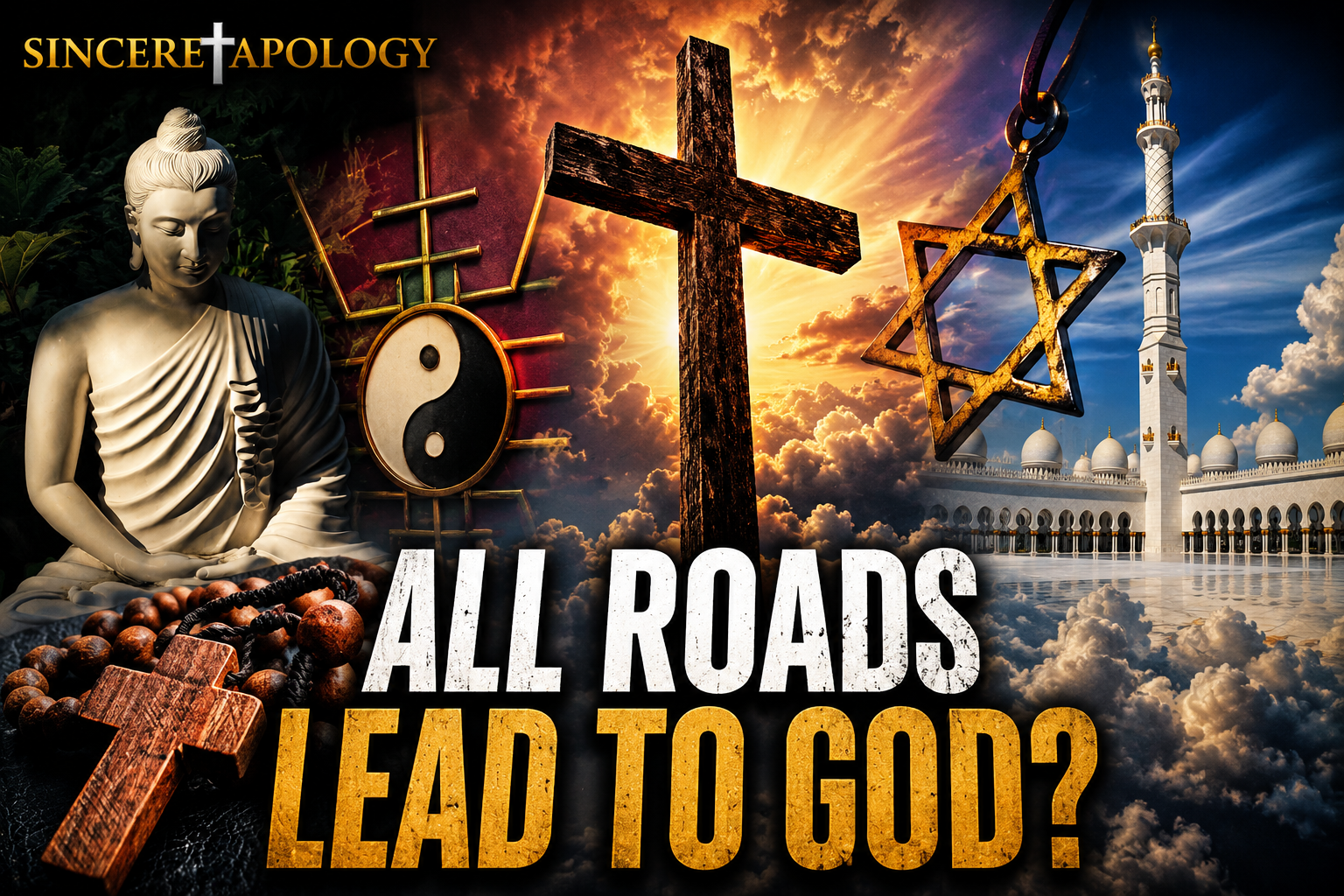
In a world filled with many religions, philosophies, and spiritual paths, one of the most controversial claims Christianity makes is this: Jesus Christ is the only way to salvation. For many people, that statement feels uncomfortable, offensive, or even intolerant. Others wrestle sincerely with questions such as: What about devoted followers of other religions? Would a loving God reject sincere people? Is Christianity arrogant for claiming exclusive truth?
These are not small questions. They touch eternity, human dignity, and the very character of God. They deserve more than shallow arguments or angry debates. They deserve humility, honesty, prayer, and compassion.
As followers of Christ, we must approach this subject with tears before triumphalism, with grace before pride, and with deep awareness that every human being is created in the image of God and loved by Him deeply.
The goal of this discussion is not to attack other people or elevate Christians above anyone else. The purpose is to understand what Jesus Himself taught and why the gospel matters so profoundly.
The Central Claim of Christianity
At the center of Christianity is not merely a moral system, a denomination, or a set of rituals. Christianity is centered on a Person: Jesus Christ.
Jesus made statements that leave little room for reducing Him to merely one spiritual option among many. In John 14:6, Jesus declared:
“I am the way, the truth, and the life. No one comes to the Father except through Me.”
This is one of the most debated verses in all of Scripture because it is unmistakably exclusive. Jesus did not say He was a way. He said He was the way.
The apostles preached the same message. Acts 4:12 says:
“Nor is there salvation in any other, for there is no other name under heaven given among men by which we must be saved.”
These passages are not expressions of human arrogance. They are declarations about who Jesus is. Christianity stands or falls on the identity of Christ. If Jesus truly is the divine Son of God who died for humanity’s sins and rose again, then His claims carry eternal authority.
Why Christianity Is Exclusive
Many people hear the word exclusive and immediately think of discrimination or hatred. But biblical exclusivity is not about ethnic superiority, social class, intelligence, or moral achievement. In fact, the gospel destroys human boasting.
Christianity is exclusive in its source of salvation, but radically inclusive in its invitation.
Revelation 22:17 says:
“Whoever desires, let him take the water of life freely.”
The invitation is open to all:
- Rich and poor
- Educated and uneducated
- Every race and nationality
- Every background and history
- The broken, the addicted, the wounded, and the self-righteous alike
The exclusivity of Christianity is not that only certain people are welcome. The exclusivity is that salvation comes only through Christ because only Christ accomplished what humanity could never accomplish for itself.
According to Scripture:
- Humanity is separated from God by sin (Romans 3:23)
- Human effort cannot erase guilt before a holy God (Ephesians 2:8–9)
- Jesus alone lived a sinless life
- Jesus alone bore humanity’s sins on the cross
- Jesus alone conquered death through the resurrection
The gospel is exclusive because the cross is unique.
Is Christianity Intolerant?
This question is especially important in modern culture, where tolerance is often viewed as the highest virtue.
But we must define tolerance carefully.
Biblical Christianity teaches believers to love all people, including those who disagree with them. Jesus commanded:
“Love your enemies, bless those who curse you.” — Matthew 5:44
Christians are called to show kindness, respect, compassion, and humility toward everyone. Genuine Christianity never gives permission for hatred, cruelty, mockery, racism, or abuse.
However, modern society sometimes defines tolerance as believing all viewpoints are equally true. That is something no worldview consistently practices.
For example:
- Atheists believe theism is mistaken
- Muslims reject core Christian beliefs
- Hindus and Buddhists differ on ultimate reality
- Secular philosophies reject many religious claims altogether
Every worldview makes truth claims and excludes opposing ideas at some level.
The real issue is not whether truth is exclusive. The real issue is whether Jesus is truly who He claimed to be.
Christianity becomes dangerous when truth is spoken without love. But it also becomes unfaithful when love is used to abandon truth. Jesus embodied both perfectly:
“Full of grace and truth.” — John 1:14
The Spirit of Christ calls believers to stand firmly in truth while treating people with gentleness and dignity.
What About Sincere Followers of Other Religions?
This is one of the most emotional and difficult questions people ask.
Many followers of other religions are deeply sincere, moral, sacrificial, disciplined, and spiritually devoted. Christians should acknowledge this honestly and respectfully. Sincerity is real. Compassion is necessary.
But sincerity alone does not determine truth.
A person can sincerely believe something incorrect and still be mistaken. Throughout history, people have sincerely believed many conflicting ideas. Truth is not measured merely by intensity of belief.
The Bible teaches that salvation is not ultimately based on how sincere we are, but on whether we are reconciled to God through Christ.
This can feel difficult emotionally because many of us know good people from other faith backgrounds. Yet Christianity teaches that every human being—including Christians themselves—is saved only by grace, not by personal goodness.
Romans 5:8 says:
“But God demonstrates His own love toward us, in that while we were still sinners, Christ died for us.”
The gospel humbles everyone equally. Christians are not saved because they are morally superior. They are saved because of the mercy of God.
At the same time, Scripture also reveals the heart of God toward humanity:
“The Lord is… not willing that any should perish but that all should come to repentance.” — 2 Peter 3:9
God is not looking for reasons to condemn people. He is reaching toward humanity with love, patience, and mercy.
The Difference Between Jesus and Every Other Religious Founder
One reason Christianity remains exclusive is because Jesus is fundamentally different from every other religious teacher.
Many religious leaders point toward spiritual paths. Jesus pointed to Himself.
- Buddha taught enlightenment
- Muhammad taught submission
- Philosophers taught wisdom
- Jesus declared Himself to be the resurrection and the life
Christianity is not merely advice about morality. It is the announcement that God entered human history.
The cross reveals both the seriousness of sin and the depth of God’s love. At Calvary, justice and mercy met together.
No human philosophy could accomplish what happened there.
Speaking Truth Without Pride
One of the greatest dangers in discussing exclusivity is spiritual pride.
Christians must never speak as though they are better than others. The gospel leaves no room for arrogance. Every believer stands only because of grace.
The Apostle Paul wrote:
“Let him who thinks he stands take heed lest he fall.” — 1 Corinthians 10:12
When Christians forget humility, they misrepresent Jesus.
Christ never compromised truth, yet sinners were drawn to Him because they sensed His compassion. He spoke firmly, but He also wept. He corrected, but He also restored.
The church should reflect that same spirit today.
The Heart of the Gospel
The exclusivity of Christianity is not meant to produce fear-driven superiority. It is meant to magnify the beauty of Christ.
The message of Christianity is ultimately not:
- “We are better.”
- “We know more.”
- “Everyone else is worthless.”
The message is:
- Humanity is broken.
- God loves humanity deeply.
- Jesus came to rescue sinners.
- Salvation is offered freely by grace.
- Anyone can come to Christ.
The gospel is both deeply convicting and deeply hopeful.
No past is too dark.
No addiction is too strong.
No failure is too great.
No person is beyond the reach of God’s mercy.
Jesus still says:
“Come to Me, all you who labor and are heavy laden, and I will give you rest.” — Matthew 11:28
Final Encouragement
In an age of confusion, hostility, and spiritual searching, Christians are called to hold truth with tenderness.
The exclusivity of Christianity should never produce hatred. It should produce urgency, compassion, humility, prayer, and love for people.
Truth without love becomes harsh.
Love without truth becomes empty.
But when grace and truth walk together, people encounter the heart of Christ.
The Christian faith does not teach that God delights in excluding people. Rather, it teaches that God made a way for humanity through Jesus Christ at immeasurable cost to Himself.
The cross is not a symbol of divine arrogance.
It is a symbol of divine sacrifice.
And the invitation of Christ remains open today:
“Whoever comes to Me I will never cast out.” — John 6:37