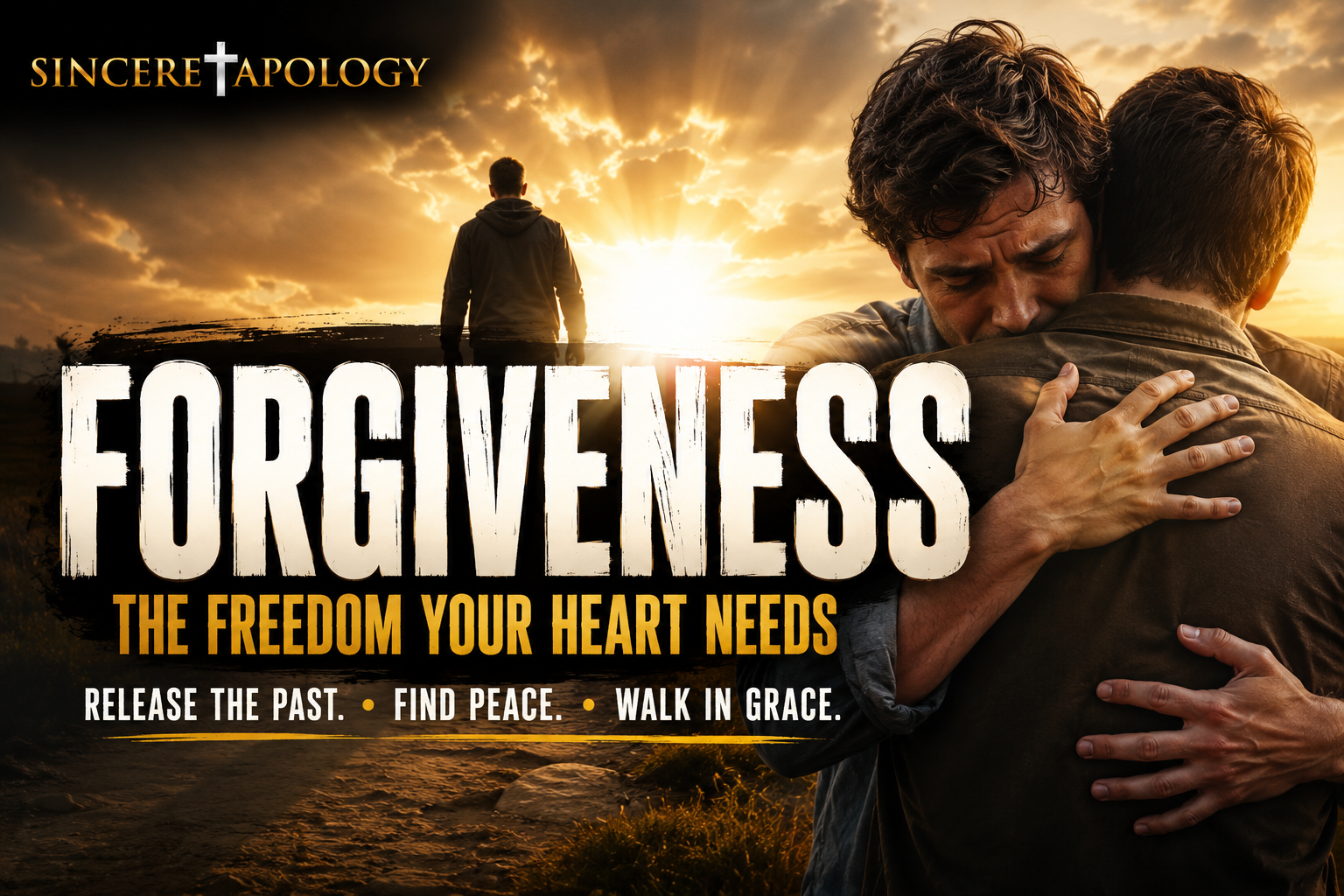
Forgiveness: The Freedom God Wants You to Experience
“Be ye kind one to another, tenderhearted, forgiving one another, even as God for Christ’s sake hath forgiven you.” — Ephesians 4:32 (KJV)
Few words carry as much weight as forgiveness. It sounds beautiful when we read about it in Scripture, yet it can feel incredibly difficult when we’ve been deeply wounded. Betrayal, rejection, lies, broken promises, harsh words, and painful memories often leave scars that seem impossible to erase.
If you’ve ever struggled to forgive someone who hurt you, you’re not alone. The Bible never pretends forgiveness is easy. Instead, it shows us that forgiveness is a choice empowered by God’s grace rather than our own strength.
The remarkable truth is this: forgiveness is not merely a gift we give someone else—it is one of the greatest gifts God gives to us.
What Is Forgiveness?
Forgiveness does not mean pretending the offense never happened. It is not approving sinful behavior or excusing injustice. It does not require forgetting every painful memory or immediately rebuilding broken trust.
Biblical forgiveness is the decision to release personal vengeance into God’s hands. It is choosing not to repay evil for evil while trusting the Lord to judge righteously.
The Apostle Paul reminds believers:
“Dearly beloved, avenge not yourselves, but rather give place unto wrath: for it is written, Vengeance is mine; I will repay, saith the Lord.” (Romans 12:19, KJV)
Forgiveness says, “I refuse to let bitterness control my heart. I will trust God to deal justly with what has happened.”
God’s Example of Forgiveness
The greatest demonstration of forgiveness is found at the cross.
Jesus Christ endured betrayal, mockery, false accusations, rejection, and unimaginable suffering. Yet while hanging on the cross, He prayed:
“Father, forgive them; for they know not what they do.” (Luke 23:34, KJV)
Those words reveal the heart of God.
Every believer has received mercy they could never earn. Our sins separated us from God, but through Christ’s sacrifice, forgiveness became available to everyone who repents and believes.
Paul writes:
“In whom we have redemption through his blood, the forgiveness of sins.” (Colossians 1:14, KJV)
When we remember how much God has forgiven us, it becomes easier to extend grace to others.
Why Forgiveness Is So Difficult
Forgiveness can feel impossible because pain is real.
Sometimes the wounds come from strangers.
Sometimes they come from family.
Sometimes they come from trusted friends.
Sometimes they come from people within the church.
When we’ve been hurt deeply, our natural response is to protect ourselves or desire revenge. Yet bitterness quietly becomes its own prison.
Hebrews warns believers:
“Looking diligently lest any man fail of the grace of God; lest any root of bitterness springing up trouble you, and thereby many be defiled.” (Hebrews 12:15, KJV)
Bitterness rarely stays hidden. It influences our thoughts, relationships, attitudes, and even our fellowship with God.
Forgiveness breaks those chains.
The Blessings of Forgiving Others
1. Forgiveness Brings Spiritual Freedom
Carrying resentment is exhausting.
Every remembered offense can reopen emotional wounds. But when we forgive, we surrender those burdens to Christ.
Jesus invites us:
“Come unto me, all ye that labour and are heavy laden, and I will give you rest.” (Matthew 11:28, KJV)
The heart that forgives often discovers a peace that bitterness could never produce.
2. Forgiveness Protects Your Heart
Unforgiveness slowly shapes how we see everyone around us.
Instead of expecting God’s goodness, we begin expecting disappointment.
Instead of loving freely, we become suspicious and guarded.
Forgiveness keeps our hearts tender rather than hardened.
3. Forgiveness Reflects Christ’s Character
Followers of Jesus are called to represent Him.
Every act of forgiveness demonstrates the transforming power of the gospel.
People notice when believers respond differently than the world expects.
Mercy shines brightly in a culture that often celebrates revenge.
4. Forgiveness Restores Fellowship with God
Jesus taught that forgiving others is closely connected with our relationship with the Father.
Our willingness to forgive reflects whether we truly understand the mercy we’ve received ourselves.
Forgiveness is not earning salvation—it is evidence that God’s grace is changing our hearts.
Does Forgiveness Mean Trust Is Instantly Restored?
Not always.
The Bible distinguishes forgiveness from wisdom.
A broken relationship may require time, repentance, accountability, and restored character before trust can be rebuilt.
Forgiveness releases the debt.
Trust is rebuilt through consistent faithfulness.
Healthy boundaries may still be necessary in certain situations, especially where abuse, manipulation, or ongoing harm exists.
Forgiveness and wisdom can exist together.
Practical Steps Toward Forgiveness
If forgiving feels overwhelming, begin with prayer.
Ask God to soften your heart.
Be honest about your pain.
Tell Him exactly what happened and how it affected you.
Choose forgiveness even if your emotions have not yet caught up.
Pray for the person who hurt you.
This may seem impossible at first, but Jesus specifically instructed His followers to pray for those who mistreat them.
Keep surrendering the offense whenever painful memories return.
Forgiveness is often not a single emotional moment but a repeated decision to trust God.
When You Need God’s Forgiveness
Perhaps you are reading this and realize that you are the one who has caused pain.
The good news of the gospel is that no sincere repentance is beyond God’s mercy.
John writes:
“If we confess our sins, he is faithful and just to forgive us our sins, and to cleanse us from all unrighteousness.” (1 John 1:9, KJV)
God specializes in restoring broken lives.
His grace is greater than your failures.
Final Thoughts
Forgiveness does not erase history, but it changes the future.
It replaces bitterness with peace.
It exchanges resentment for hope.
It frees the wounded heart from carrying a burden God never intended it to bear.
Perhaps today God is gently inviting you to take the first step.
You may not be able to change what someone else has done.
You cannot rewrite yesterday.
But by God’s grace, you can choose how tomorrow will begin.
Forgiveness is not weakness.
It is one of the strongest demonstrations of faith.
When we forgive, we declare that God’s justice is sufficient, God’s grace is enough, and Christ’s example is worth following.
May the Lord give each of us the courage to forgive as we have been forgiven, allowing His love to heal our hearts and His peace to guard our minds.
“And be ye kind one to another, tenderhearted, forgiving one another, even as God for Christ’s sake hath forgiven you.” — Ephesians 4:32 (KJV)